
 (931) 388-4315
Dental Crowns in Columbia, TN
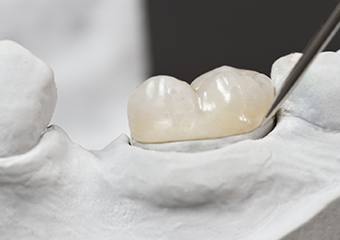 Every tooth is made up of two parts: the crown that is above the gum line and the root that is below it. Needless to say, they aren’t completely separate and what happens to the crown can certainly impact the root. That’s why a dental crown is such an important restoration. If you have a tooth that is severely damaged by decay or a traumatic injury, then a dental crown may be just what’s needed to protect the remaining tooth structure both above and below the gum line. Dr. Goodman often uses dental crowns to help strengthen and protect a damaged tooth, so you can still have an attractive smile with all of your own natural teeth.
When Is A Dental Crown Used?
Dental crowns are part of Dr. Goodman’s conservative approach to dentistry, which dictates maintaining and restoring as much natural tooth structure as possible. With this in mind, your Columbia, TN dentist uses dental crowns—also called dental caps—for a number of restorative and cosmetic purposes, including:
- Strengthening a tooth that has undergone a root canal
- Providing form to a tooth that has suffered extensive decay
- Holding together a deeply cracked tooth
- Rebuilding a worn down tooth
- Securing a dental bridge
- Concealing a permanently stained or discolored tooth
- Completing a dental implant restoration
What Are Dental Crowns Made Of?
Years ago, dental crowns were only made of metal, like amalgams made from silver or gold. Obviously, these were quite noticeable when you smiled, spoke, or ate. Today, Dr. Goodman can use all-porcelain or all-ceramic crowns. Thanks to advances in the manufacturing of these materials, they are equally as strong and durable as their metal predecessors.
How is a Dental Crown Placed?
You’ll probably only need to schedule two appointments that are about two weeks apart for a dental crown procedure. After the local anesthetic has taken effect, Dr. Goodman will begin to prepare the tooth at the first visit. This involves removing any decay as well as a portion of the tooth structure along the biting surface and sides. By reshaping the sides of the tooth, the crown is able to fit comfortably between the teeth along either side; removing some of the biting surface ensures that the crown won’t feel high when you bite down.
Once the tooth prep is completed, we take an impression that is used to immediately give you a temporary crown. This same impression is then sent to a special dental lab where the permanent crown is hand crafted. In about two weeks, your new crown will be ready to replace the temporary.
If you need a dental crown in Columbia, TN near Mt Pleasant, Culleoka, and Spring Hill, contact the office of Dr. Alex Goodman.
Understanding the Cost of Dental Crowns
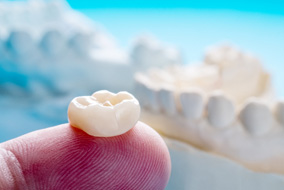
Dr. Goodman believes that a tight budget should never stand in the way of a healthy smile, which is why he’s proud to offer durable, natural-looking dental crowns that protect your smile regardless of your financial situation. While we do understand that when it comes to oral health treatment, cost can sometimes be a factor, we are committed to providing you with several solutions to make the price of your restoration more affordable. Here’s a closer look at how we determine the cost of your dental crown, and how we can help make this valuable treatment easier on your wallet.
Factors that Affect the Cost of Dental Crowns

There are several important factors that must be considered when determining the cost of your new dental crown, including:
- How severe the damage is to the tooth, and whether you’ll need any additional procedures first, such as a root canal.
- The type of material used to make the dental crown.
It’s important to remember that when it comes to your oral health, the cheapest option is not usually the best. Quality is important, especially for something that will be going in your mouth. You want your new crown to not only look good but feel good and last for as long as possible, too!
Does Dental Insurance Cover Dental Crowns?

Most dental insurance plans consider dental crowns a major procedure and will generally cover around 50% of their cost if deemed medically necessary. However, it is important to note that all dental insurance plans are different, which is why it is important to verify your coverage first. At Goodman Family Dentistry, we are happy to do this for you before beginning any work.
Other Options for Making Dental Crowns Affordable
In addition to welcoming your dental insurance, Goodman Family Dentistry is proud to partner with CareCredit, our preferred third-party lender. CareCredit allows patients to break up the cost of their dental treatment into multiple, low-to-no-interest monthly payments that may be more manageable with their budget.
At Goodman Family Dental, we’re here to help you with managing the cost of your dental crown treatment. To learn more about your financial options, schedule a consultation with us today.
Dental Crown FAQs
How Long Do Dental Crowns Last?
On average, all-porcelain and all-ceramic crowns last for about 15 years. However, this will ultimately depend on how well you take care of your crown. With proper maintenance, your crown could protect your tooth for much longer! Here’s what we recommend:
- Brush your teeth twice daily with a soft bristled toothbrush and fluoride toothpaste
- Floss between your teeth and underneath your crown once daily
- Be mindful of extremely crunchy, hard, and chewy foods, as they can wear down your crown and natural enamel
- Don’t use your teeth as tools for opening packaging or bottles
Does It Hurt to Get a Dental Crown?
Most patients find that getting a dental crown in Columbia is comparable to getting a simple filling. We’ll numb the area with a local anesthetic before reshaping your tooth for the crown, so you’ll be quite comfortable throughout the procedure.
We don’t typically need to administer an anesthetic when its time to place the crown, but can do this for you upon request.
You may experience some soreness after your treatment. Over-the-counter pain relievers are often effective at addressing the discomfort, but if your pain worsens or lingers after two weeks, please give us a call.
Do Dental Crowns Feel Natural?
One of the reasons porcelain and ceramic are popular materials for dental crowns is they feel incredibly similar to natural enamel. You may notice a slight difference in texture if you run your tongue over your teeth, but otherwise, your crown should be virtually indistinguishable from the rest of your pearly whites.
What Happens If You Wait Too Long to Get a Dental Crown?
While it’s generally safe to wait a day or two to get a dental crown, it is not recommended to wait much longer than that. The longer a damaged tooth goes without protection, the more likely it is to experience further damage. Cracks in the enamel can also trap harmful bacteria, making the tooth more vulnerable to cavities. In severe cases, these issues can make the tooth no longer viable, and it has to be extracted. It’s best to act promptly when your dentist says you need a crown.
Can Dental Crowns Be Whitened?
If you wanted to whiten your dental crown, we wouldn’t use the same bleaching agents involved in our cosmetic teeth whitening treatments. Those agents are specifically formulated to slip past the pours in natural enamel so they can target and eliminate stains trapped below the surface. Porcelain and ceramic have very different compositions, making it difficult for the bleaching agents to effectively remove stains.
Instead, we would simply polish or replace your crown.