
 (931) 388-4315
Gum Disease Treatment – Columbia, TN
Making Your Gums More Stable
 While your teeth are crucial to your oral health, so are your gum tissues. These parts of your smile cause serious issues when infected, reducing your overall quality of life. The “good” news is that Goodman Family Dental offers top-tier gum disease treatment here in Columbia. As performed by our dental team, this service would handily address your infected gums. Just keep reading to learn more about it, or book a consultation with us soon.
Why Choose Goodman Family Dentistry for Gum Disease Treatment?
- Screening of Gums with Every Checkup
- Warm & Attentive Dental Team
- Flexible Financing Available
What is Gum Disease?

In essence, gum disease is an infection of the gums surrounding your teeth. The condition usually results from major plaque buildup, which is itself caused by poor eating habits, bad oral hygiene, etc. Other health-related factors – especially genetics, hormones, and smoking – can also make it more likely.
Gum disease has two distinctive stages: gingivitis and periodontitis. The first amounts to slight gum inflammation, something that can be reversed with proper oral care. In contrast, stage two – periodontitis – is a full-blown infection that attacks your jaw and gum tissues. This latter form is irreversible; dentists can only help you manage it.
Symptoms of Gum Disease

Since gum disease has two stages, it’s known to cause a wide range of symptoms. A patient's signs will depend on the severity of their condition, its progress rate, and other factors.
Consider a case of gingivitis as an example. For this form of gum disease, common signs include:
- Chronic bad breath
- Swollen gums
- Red and bleeding gums
- Gum tenderness
- Gum recession
Periodontitis causes more severe symptoms than those above. In particular, it’s known to prompt:
- Tooth sensitivity (often due to gum recession)
- Chewing pain
- A shift in your bite
- Changes in your restoration’s fit
- Loose permanent teeth
- Permanent tooth loss
How Do We Treat Gum Disease?

Before proceeding, Dr. Goodman will conduct an oral exam to assess your smile. This step lets us check the state of your gum disease and how it’s affected you. Once we know those facts, we’ll suggest one (or more) of the following treatment options:
Antibiotic Treatment

If your gum disease is severe, we may suggest antibiotic treatment along with scaling and root planing. This procedure applies antibiotics to your infected gum pockets, reducing the presence of harmful oral bacteria. Such medicine only takes two weeks to work and strengthens your weakened gums, so it prevents worse symptoms from cropping up.
Scaling & Root Planing
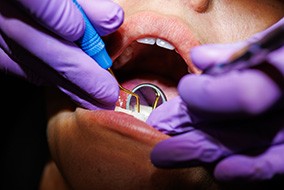
Known as the standard gum disease treatment, scaling and root planing is a “deep cleaning” of your gum tissues. Initial scaling uses special tools to remove plaque above and below your gumline. Afterward, root planing will smooth out your tooth roots to make reinfection less likely. The overall treatment requires one to four dental visits, and it can be combined with other options for fuller healing.
Do I Need Scaling & Root Planing?

In some cases, gum disease can be reversed via thorough at-home oral hygiene. However, if your case is a bit more advanced, we may recommend scaling and root planing. Here are some signs that you should visit us for an evaluation:
- Red, swollen, and tender gums
- Gums that bleed easily when you brush and floss
- Gum recession (your teeth may appear unusually long)
- Chronic bad breath
- Noticeable pockets between your teeth and gums
- Visible plaque buildup along your gumline
The Process of Scaling & Root Planing
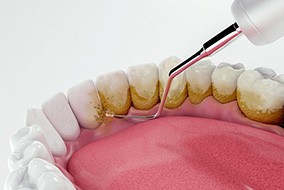
Scaling and root planing is a two-part process that may occur over the course of one or more appointments (depending on the extent of your gum disease).
During scaling, we use a special instrument to remove plaque from both above and below your gumline. During root planing, we smooth the roots of your teeth. Not only does this make it more difficult for bacteria to cling to them, but it also contributes to an environment where your gums can heal and reattach to your tooth roots.
Aftercare Tips for Scaling & Root Planing

Scaling and root planing is an intensive process, so it might take a few weeks for you to fully recover. In the meantime, these tips can minimize discomfort and support your healing process:
- Periodically rinse your mouth with warm salt water.
- Be very gentle when you are brushing and flossing.
- Avoid hot and spicy foods.
- Do not consume alcohol or acidic beverages.
- Eat a soft diet for the first 48 hours after your treatment.
- Call our team if you have any questions or concerns.